AI in Education
The frameworks we have, and the one we still need.
My midnight thoughts: On the 21st Century Competencies Framework and why the age of AI needs a new conversation

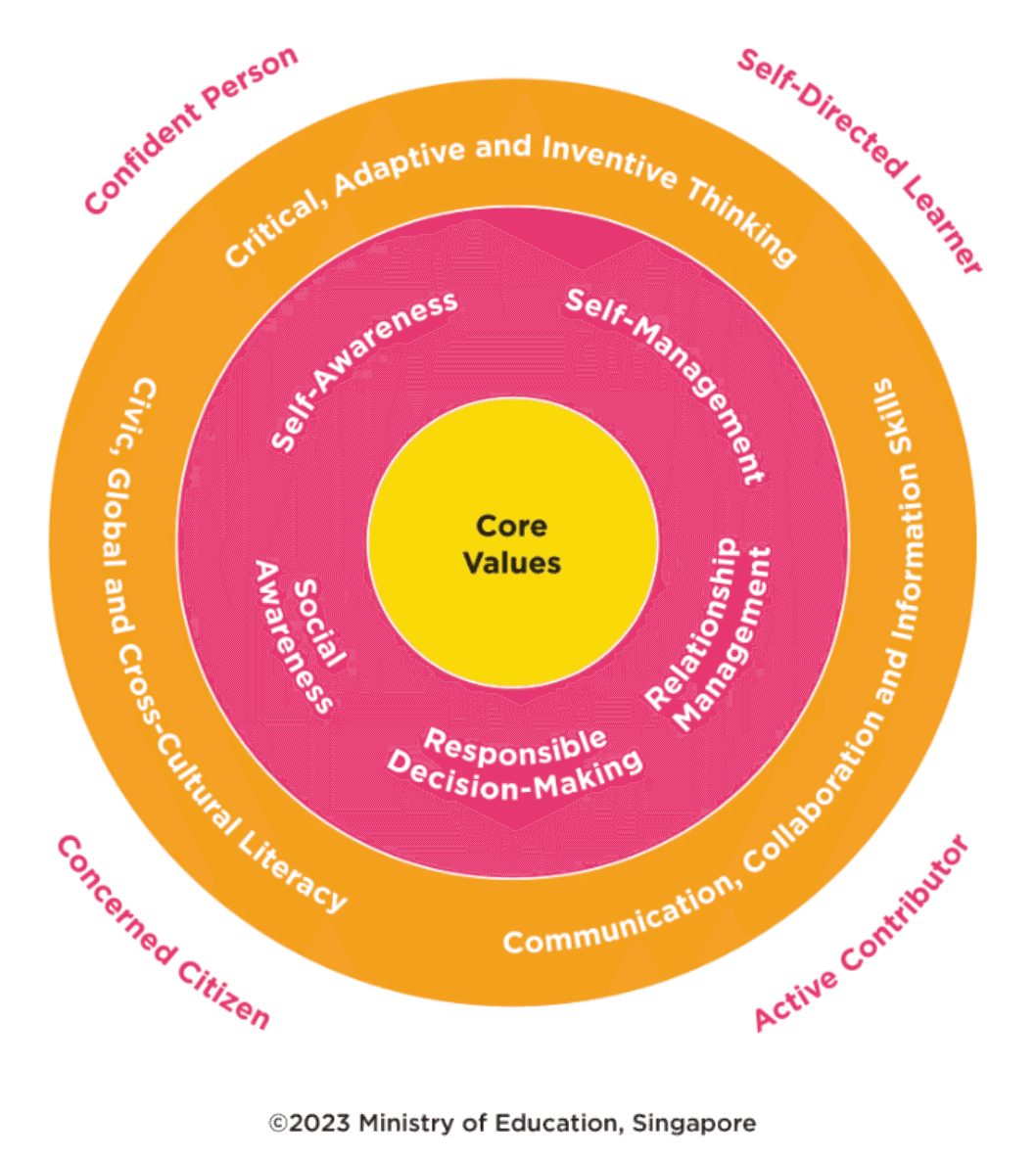
The 21st Century Competencies framework was first introduced by MOE in 2010. It was enhanced most recently in 2023, when MOE placed greater emphasis on adaptive thinking, communication, and civic literacy. They were responding, as they put it, to "rapid technological advancements and global developments."
The framework is structured as concentric circles: core values at the centre, social-emotional competencies around that, the emerging 21st century competencies on the outer ring, and the Desired Outcomes of Education holding it all together on the outside.
This framework was introduced in a world that was defined by globalisation, rapid technological change, and an increasingly interconnected economy. The internet had already reshaped how information moved. The question for educators was no longer just what children should know, but what they should be able to do with knowledge in a complex, fast-moving world.
It was important then, for educators to study this framework and have conversations around it, because it gave schools a shared language. It moved the conversation beyond academic results and toward the whole person. Character, emotional skills, the ability to think across contexts and cultures. It urged educators to see their role differently.
With the 21CC framework, values education became more intentional. Social-emotional learning was taken seriously as part of the curriculum, not treated as an afterthought. Curriculum writers, educators and policy makers talked about students not just as learners of content but as people being shaped for life.
The 21CC framework is still relevant, and it still matters. The core values at its centre are not time-bound, neither are the social-emotional competencies. These are human fundamentals. A child who cannot manage their emotions, build relationships or make responsible decisions will struggle regardless of what tools exist in the world around them.
However, that outer ring (the emerging competencies - critical thinking, communication, information literacy, collaboration) were, I believe, named as emerging because the world was changing and children needed those skills to meet it. But the world has changed again, even more sharply this time, and perhaps it is time to think about the next conversation.
Now, as we enter an age of AI, educators will need a new framework to huddle around, a shared language for a new set of questions that none of our existing frameworks had been built to answer.
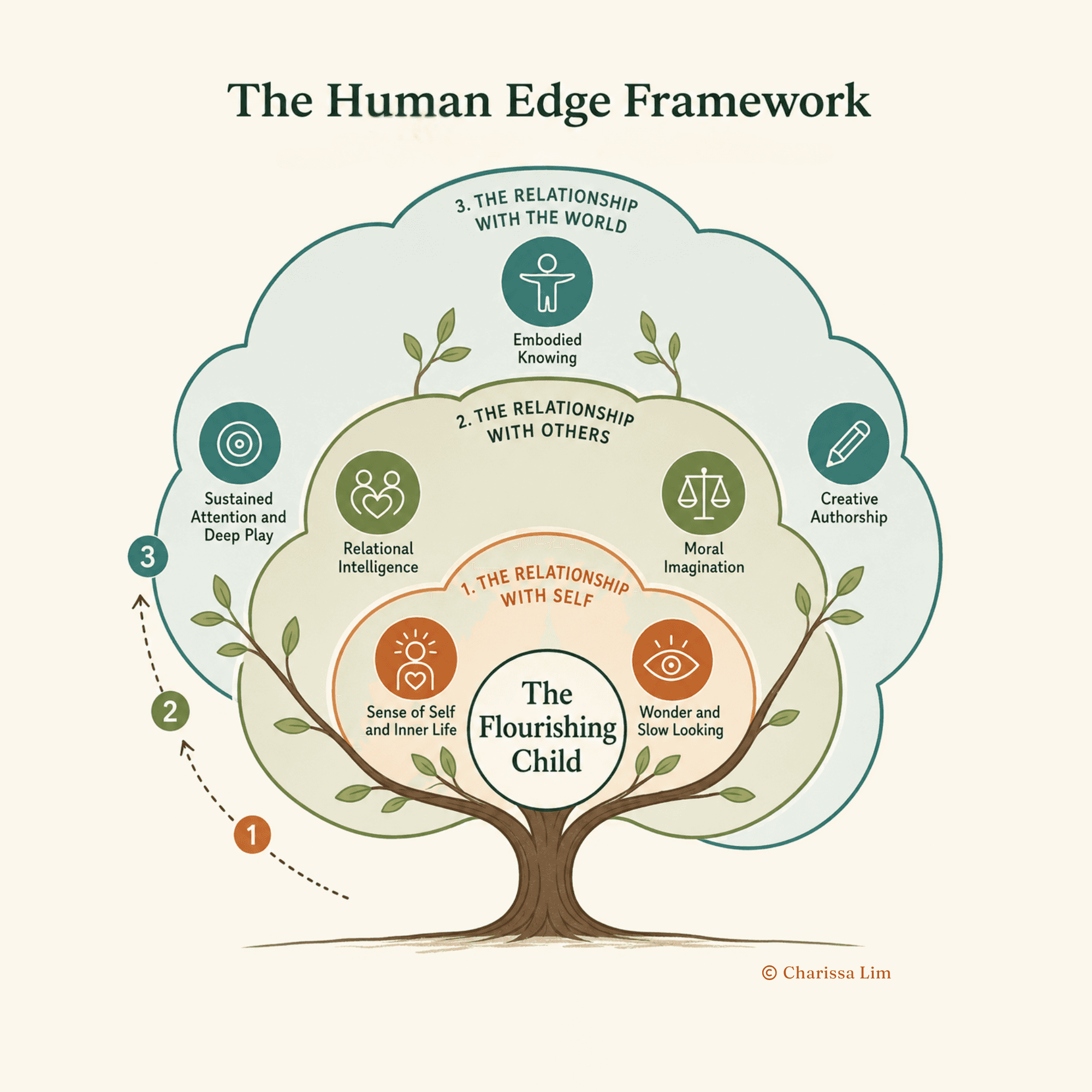
To start the conversation, I am proposing the Human Edge Framework. It is organised around one focused question: What do children need to develop that AI cannot replicate? What should already be inside them, before they ever engage with an AI tool?
Here's a framework visual I created (with my AI as collaborator):
Reference:
21st Century Competencies Framework by MOE Singapore, 2023