AI in Education
·
5
min read
Reflections from REACH 2026 and EDUtech Asia 2026
Over the past two weeks, I attended two education conferences that, at first glance, had very little in common.

The first was the Reggio Emilia in Asia for Children (REACH) conference, which I went to last week to learn more about the Reggio Emilia approach. The theme was education in complex times, and it wasn’t long before the conversation turned to AI. The speakers talked about how AI has blurred the line between what is real and what is artificial, and the educators who had travelled from Reggio Emilia in Italy raised some questions I found especially thought-provoking.
Can AI know children the way their educators do?
Can AI understand children's emotions, their preferences, the small nuances in how they behave, and the relationships they have with the people around them?
What I appreciated was how openly they admitted that they don’t yet have a clear position on AI. They were careful not to demonise it, but they also weren’t in a hurry to bring it into their classrooms. Their view was that they need time to learn about it and understand it properly before they can consider it as one of the many languages through which children express themselves.
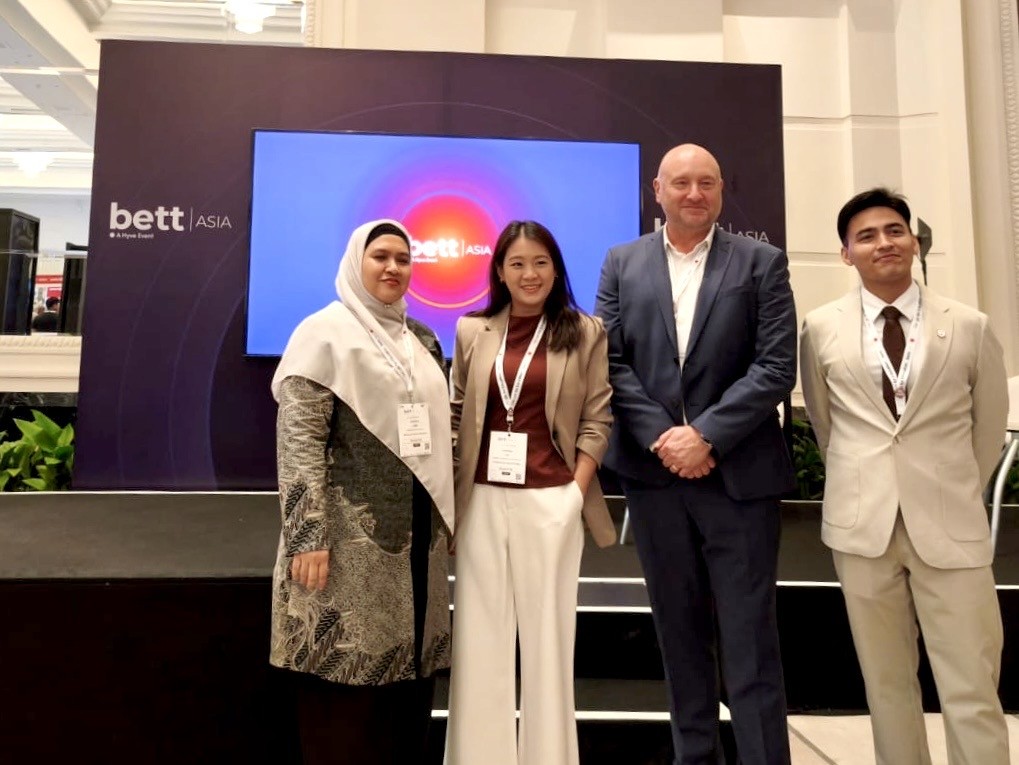
EDUtech Asia, which I attended today, felt like a different world. The exhibition hall was packed with booths showcasing tech solutions for every corner of education, from K-12 classrooms to adult learning, and the sessions were full of talk about AI adoption in schools. If REACH was about stepping back and asking questions, EDUtech looked, on the surface, like it was about moving forward and finding answers.
But the longer I listened, the more I heard the same ideas I had heard at REACH a week earlier.
In the opening keynote, one speaker observed that when it comes to AI in education, adoption is moving faster than readiness. Another encouraged school leaders to stop asking “What should I change in my school?” and to start asking “What should I not change?” That second question struck me because it is exactly the kind of question the Reggio Emilia educators were asking. Before we decide what AI can do for us, we need to be clear about what we value and want to protect.
Later, during a panel discussion, Kerry Moore brought up a scene from Harry Potter and the Chamber of Secrets. Ginny Weasley had poured her thoughts into Tom Riddle’s diary, trusting it completely without realising how dangerous an enchanted object could be. When her father, Arthur Weasley, found out, he told her: “Never trust anything that can think for itself if you can’t see where it keeps its brain.” It got a laugh from the audience, but the point was a serious one, and it applies just as well to the AI tools we put in front of children today.
As the day went on, another theme kept surfacing across the sessions I attended. Most of us have been conditioned to see the grade, the result or the final product as the goal of learning. Speaker after speaker pushed back on this and argued that the process matters far more. It is a point worth holding on to, because a question we hear more and more is “Why should I learn to do this if AI can do it for me?” The answer is that the value was never only in the finished product. It lies in the process of learning and doing, because that is where the growth happens.
One of my favourite talks of the day was by Dr Ian Hunter, founder and CEO of Writer’s Toolbox, who spoke about writing. He described writing as something that comes from the writer’s own emotions and mind, and he was firm that pedagogy should always come before technology. In his words, technology is subservient, not the master. He quoted Peter Elbow (1983), who wrote that “the act of writing amplifies knowledge,” and explained how thinking moves through stages, from coming up with ideas, to shaping them, to finally bringing them to the surface on the page. Drawing on Kellogg (1994) and Rowlands (2016), he made the case that weak writing skills limit a person’s ability to think. He illustrated this with two students who start with the same ideas. The one with weaker writing skills ends up producing weaker thinking, while the one with stronger writing skills is able to develop those same ideas into something far more sophisticated. Their starting points were identical, and what separated them was the skill they had built through practice.
This idea is at the heart of Writer’s Toolbox. Hunter explained that the platform is designed to teach students to become better writers, rather than to write for them. Its AI gives each student personalised feedback on their work, highlights what they need to improve and sets out clear next steps, but the thinking and the writing are left to the student. The tool is there to help them get better at the work, not to do it on their behalf.
To me, this is a good example of how we can hold students to high standards and still keep the purpose of learning at the centre. Results still matter, but they have to be earned through the thinking. I think that is what a good edtech tool should do. It should help students achieve better outcomes by strengthening their process instead of letting them skip it. If I had to name one measure of whether an edtech tool is good, especially one that students use directly, that would be it.
So, two conferences that looked so different on the surface ended up leading me to the same conclusion: pedagogy first, technology second.